Storm Damage Roof Restoration: What to Do Before Help Arrives
The storm’s gone, but your heart’s racing. Water drips from the ceiling. Shingles are scattered like leaves after a windy day. You’re not alone—thousands face this every year. At Advance Roofing, we understand that split-second decisions after a storm can shape your home’s safety for months.
Let’s break it down. Here’s what you can do right now—before the professionals arrive—to keep your family safe, your property protected, and your peace of mind intact.
The Aftermath: Assessing the Situation
Storms don’t play favorites. Whether it’s hail, high winds, or heavy rain, the damage can sneak up on you. Sometimes it’s obvious—a tree limb through the roof, missing shingles, or gutters hanging loose. Other times, it hides: water stains crawling across your ceiling, or a musty smell creeping in.
Don’t rush. Take a breath. Start with a clear head.
Quick Safety Checklist 🛑
Your safety comes first. Before you do anything else, follow this checklist:
- Stay Outside if the Roof is Compromised: If your roof looks unstable or if you see sagging, cracks, or exposed beams, stay out until it’s checked.
- Turn Off Electricity Near Leaks: Water and electricity mix like oil and fire. If water is dripping near electrical outlets or lights, shut off the breaker for that area.
- Avoid the Attic if Water Is Pooling: Ceilings can collapse under water weight. Listen for creaks or see bulges? Stay clear.
- Check for Downed Power Lines: If you spot any, keep far away and call your utility company immediately.
- Watch for Sharp Debris: Broken glass, nails, or metal from flashing or gutters can cause injuries.
- Use Flashlights, Not Candles: After a storm, gas leaks are possible. Flames aren’t worth the risk.
Documenting Damage for Insurance
Think of your phone as your best tool right now. Insurance adjusters want proof—clear, honest photos.
- Take Photos from Different Angles: Capture shingles, gutters, skylights, and downspouts. Wide shots show the whole scene; close-ups reveal detail.
- List Damaged Items: Not just the roof—include personal property like furniture, electronics, or anything waterlogged.
- Keep Notes: Jot down the time, date, and a brief description. If you notice a ceiling leak at 2 a.m., record it.
- Save Receipts: For any repairs or materials (like tarps or buckets), save your receipts. They may be reimbursed.
- Don’t Throw Out Damaged Materials: Unless unsafe, keep shingles, flashing, or gutters. Adjusters may want to see them.
Refer to the Federal Emergency Management Agency (FEMA) guidelines for disaster documentation standards.
DIY: How to Protect Your Property (Safely)
You can’t fix everything, but small steps matter. Think of it like patching a hole in a tent during a rainstorm—temporary, but it buys precious time.
Temporary Fixes
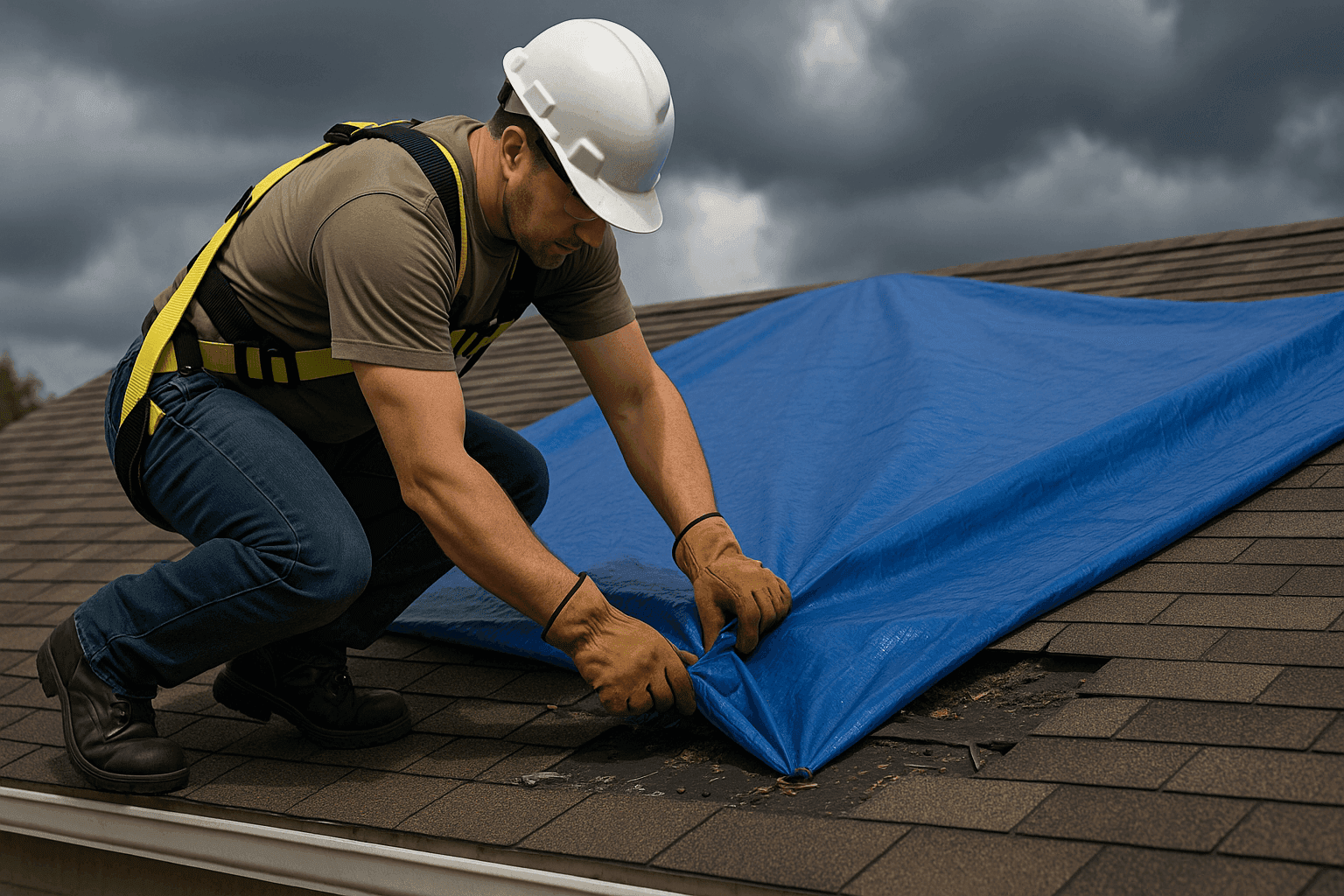
- Tarps: Secure a plastic tarp over exposed sections. Use 2x4s or heavy objects to anchor it. Only do this if it’s safe and dry—never climb on a wet or damaged roof.
- Buckets & Towels: Place buckets under leaks inside. Lay towels to catch drips and minimize floor damage.
- Move Valuables: Shift furniture, electronics, and important documents away from leaks or damp areas.
- Sealants: For small cracks around flashing, gutters, or skylights, consider applying roofing sealant from inside (attic or crawlspace) if safe.
What Not to Do
- Don’t Walk on the Roof: Damaged shingles or decking can give way. Even pros use harnesses and safety gear.
- Don’t Use Ladders in Wind or Rain: Wait for dry, calm weather if you need to reach gutters or downspouts.
- Don’t Attempt Major Repairs: Chimney flashing, roof replacement, and structural repairs need professional hands and tools.
- Don’t Ignore Hidden Damage: Small leaks grow fast. Water can travel far from the entry point, damaging insulation, decking, and more.
DIY vs. Call a Professional
There’s a line between “helpful” and “hazardous.” Here’s how to know when to call Advance Roofing:
- Call for Large Leaks: If water is pouring in, or the ceiling bulges, get help immediately.
- Call for Roof Flashing or Chimney Issues: These require specialized skills and materials to prevent future leaks.
- Call for Emergency Tarping: Many professional roofing companies offer emergency tarping after severe weather.
- Call for Structural Damage: Sagging, cracked beams, or visible deck movement are signs of deeper problems.
- Call for Gutter or Downspout Repair: Proper drainage prevents long-term water damage.
If in doubt, stay safe and let the pros handle it. The cost of a mistake is often higher than the price of a call.
What Roofing Professionals Do Upon Arrival
When the Advance Roofing team arrives, expect a thorough, step-by-step process:
- Safety First: We inspect for live wires and unstable areas before setting foot on the property.
- Comprehensive Inspection: Using ladders, drones, or camera poles, we check for damage to shingles, flashing, gutters, skylights, and more.
- Temporary Protection: Emergency tarps, sealants, and interior barriers are installed to stop further water entry.
- Detailed Documentation: Photos and written reports are provided for your insurance company.
- Clear Communication: We walk you through the findings and next steps—no jargon, just honest guidance.
- Estimate & Timeline: You’ll get an overview of costs, timeframes, and options for materials (shingle, tile, metal, or eco-friendly).
Preventative Maintenance: Less Drama Next Time 🌧️
Think of maintenance as an umbrella: better to have it before the storm. Regular checks and small repairs can save you from major headaches:
- Annual Inspections: Schedule a professional inspection—especially before storm season.
- Clean Gutters and Downspouts: Clogged gutters cause water to back up under shingles.
- Check Flashing and Sealants: Around chimneys, skylights, and vents, sealants can crack or peel.
- Trim Trees: Branches hanging over your home are storm hazards.
- Upgrade Materials: Impact-resistant shingles, metal roofing, or reinforced flashing can add years to your roof’s life.
For more, see suggestions from the National Roofing Contractors Association (NRCA) and Insurance Institute for Business & Home Safety (IBHS).
Costs & Time Factors
Every storm is different. So is every repair. Here’s what affects timing and cost:
- Extent of Damage: Minor shingle replacement is faster and less expensive than major structural repair.
- Material Type: Tile and metal roofing repairs may take longer than asphalt shingles.
- Weather: Ongoing rain or snow can delay work. Emergency tarping may be needed until conditions improve.
- Insurance Approval: Adjuster visits and paperwork can add days to the process.
- Local Codes: Some repairs require permits or inspections based on building codes (check your local guidelines).
Most emergency repairs (tarping, sealing) happen within hours to a day. Full restoration can range from days to several weeks, especially if specialty materials are needed.
When It’s an Emergency
There’s urgent—and then there’s “drop everything” urgent. Call for emergency services if:
- Water is entering rapidly: Buckets fill in minutes, not hours.
- Ceilings bulge or sag: Collapse risk is high.
- Electrical hazards are present: Water near outlets or fuse boxes.
- Major structural damage: If you see beams, joists, or the roof deck exposed.
- Mold or mildew growth: Fast action is crucial to prevent health issues.
Advance Roofing offers emergency response for these situations—your safety is our first priority.
FAQ: Common Questions After a Storm
How soon should I call my insurance company?
Call as soon as you notice damage. The sooner you start the claim, the faster you’ll get help. Document everything before cleanup.
Will my insurance cover all roof repairs?
Most homeowner policies cover “sudden and accidental” damage, such as from wind, hail, or debris. Wear-and-tear or old age may not be covered. Check your policy or ask your agent.
Can I stay in my house during repairs?
Usually, yes. But if there’s major structural damage, exposed wiring, or widespread leaks, it may be unsafe. Follow the advice of local building officials and your contractor.
How do I verify a roofing professional?
Ask for a license, proof of insurance, and references. Check for manufacturer certifications (for shingle, tile, or metal roofing) and review their standing with the Better Business Bureau.
Local & Seasonal Considerations
Storms have personalities. In some regions, hail is the main culprit. In others, it’s wind or heavy rains. Here are a few things to keep in mind:
- Hurricane-Prone Areas: Reinforced decking and hurricane straps help roofs stand up to high winds.
- Snowy Climates: Ice dams and heavy snow loads can cause leaks or collapse—consider snow guards and improved insulation.
- Fire Zones: Class A fire-rated roofing (metal, tile, certain shingles) can make a difference.
- Spring/Fall Storms: Fast temperature swings stress flashing, sealants, and gutters.
Talk to your local building office for area-specific codes and recommended upgrades.
Storm damage is tough, but you don’t have to face it alone. Take care of the basics, stay safe, and let Advance Roofing handle the hard parts. Our team is ready with the right tools, experience, and clear communication—so you get life back to normal, fast.
Call Advance Roofing now — or reach us anytime at 877-664-0687 .